ZAMACE (Zambia Agricultural Commodity Exchange) · Fintech / Agritech · 2022 – 2023
$1M+ in trades: taking Zambia's agricultural commodity exchange digital
Full Stack Developer, Afrocentec Zambia · 1.5 years
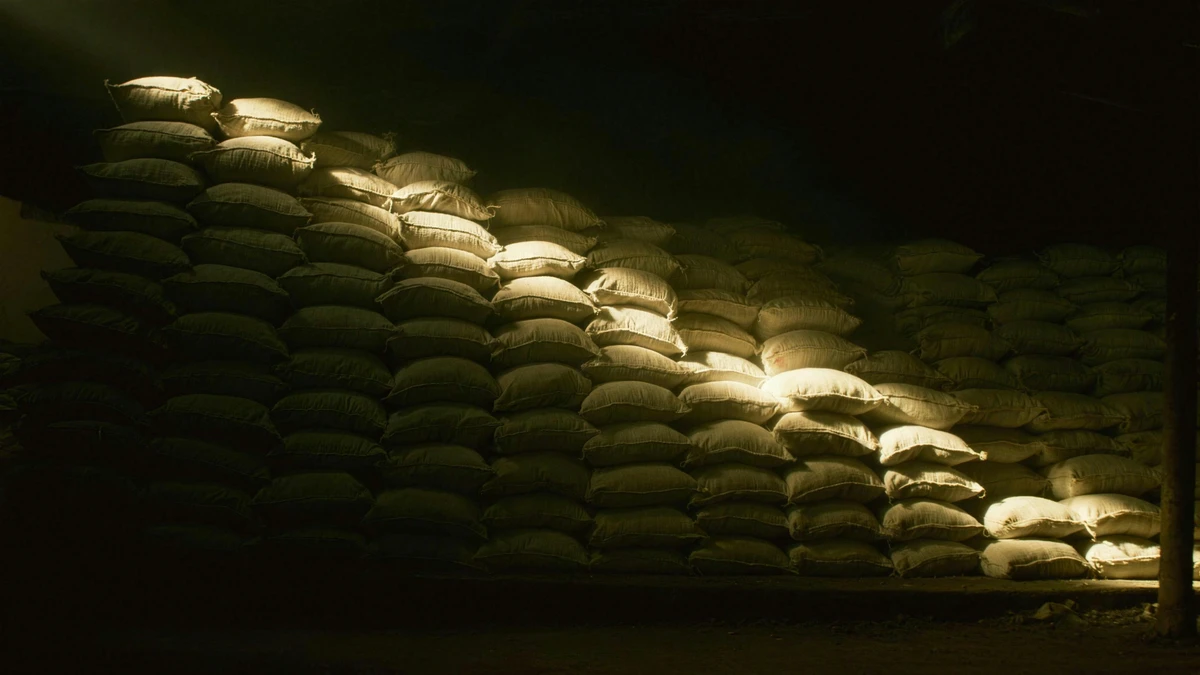
ZAMACE, the Zambia Agricultural Commodity Exchange, is where Zambian farmers, brokers, and warehouse operators trade grain and other agricultural commodities. Between 2022 and 2023, working as a Full Stack Developer at Afrocentec Zambia, I was the lead developer on the platform that took the exchange digital: an Elixir/Phoenix backend, a React member dashboard, and a public market-data website, built over roughly a year and a half. The platform is live at www.zamace.co.zm.
The challenge
Zambia’s commodity market ran on paper and phone calls. Warehouse receipts, the documents proving a farmer’s grain is sitting in a certified warehouse, were paper-based, which made them slow to issue, easy to dispute, and nearly useless as loan collateral. Farmers had little visibility into fair market prices, which left room for middlemen to set them. And there was no single place where the value chain’s participants (producers, brokers, warehouse operators, cooperatives, financial institutions, transporters) could see the same information at the same time.
That fragmentation had real costs: information asymmetry, price manipulation, and producers locked out of formal credit because they had no verifiable way to prove what they held.
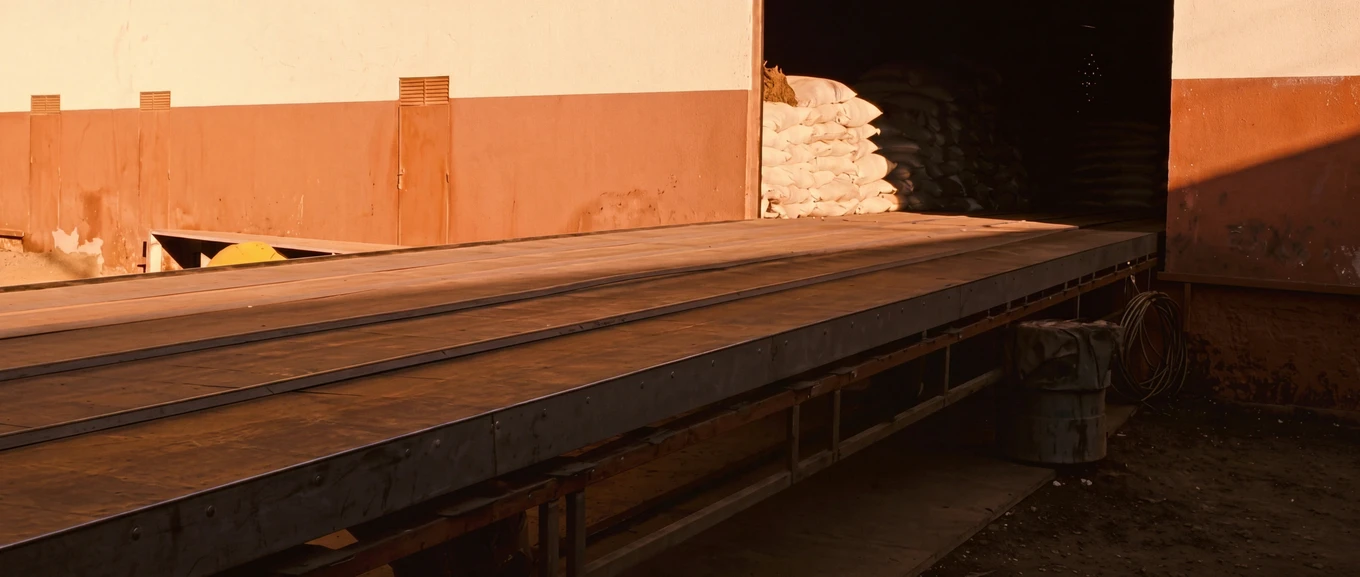
A weighbridge outside a grain store. Every warehouse receipt in the system starts with sacks weighed at a point like this.
The exchange needed more than a website. It needed the actual market mechanics, from bids and offers through matching, receipts, clearing, and settlement, expressed as software, with each stakeholder type getting a view fitted to its role.
The approach
I architected and built the platform as three integrated applications.
Backend API (Elixir/Phoenix). An exchange is mostly concurrent state: order books changing, trades matching, prices updating for everyone at once. That made the BEAM a natural fit. I structured the backend with domain-driven design, splitting the exchange’s business into bounded contexts: automated matching of buy bids to sell offers, electronic warehouse receipt issuance with QR-code verification, multi-tier membership management with KYC checks, clearing and settlement workflows, and storage fee management.
Member dashboard (React with Redux Toolkit). A role-based single-page application serving eight distinct stakeholder types (warehouse operators, brokers, exchange administrators, cooperatives, producers, and others), each with an interface cut to what that role actually does. Warehouse operators issue and manage receipts; brokers work a real-time order book; administrators move trades through Kanban-style workflows and pull reports across the exchange.
Public website (React). Real-time commodity prices, a searchable broker directory, warehouse operator listings, and public QR verification of warehouse receipts. Anyone can check what maize sold for today and confirm a receipt is genuine, including a farmer who never logs in.
Everything runs on PostgreSQL, ships in Docker, and stores documents in AWS S3.
The outcome
The paper warehouse receipt is gone. Receipts are issued electronically, verified by QR code, transfer ownership digitally, and accrue storage fees automatically. That also makes them workable collateral: a bank can verify a holding in seconds instead of taking a document on trust.
Trading is automated end to end, from offer-bid matching through contract generation, clearing, and settlement, with eight stakeholder categories operating on one platform instead of around it. Market prices that used to live in brokers’ heads are now published in real time to the public, which is the part of the build I think matters most: price discovery only disciplines a market when everyone can see it.
A note on the numbers, which are my own working estimates from platform data during the engagement rather than client-audited figures: the platform onboarded 500+ traders, handled over $1M in commodity transactions, and transaction volume grew roughly 40% after digitization.
The platform remains live and operational at www.zamace.co.zm. I later extended it beyond smartphones entirely, building a USSD gateway that put account access on feature phones. That project is its own case study.