Handisi Digital Solutions Limited (own product) · FoodTech / SaaS · 2026 · first deployment live
Provender: a food operations ERP engineered to cut FDA lot trace-backs from 8+ hours to under 5 minutes
Product of Handisi Digital Solutions Limited · Ongoing
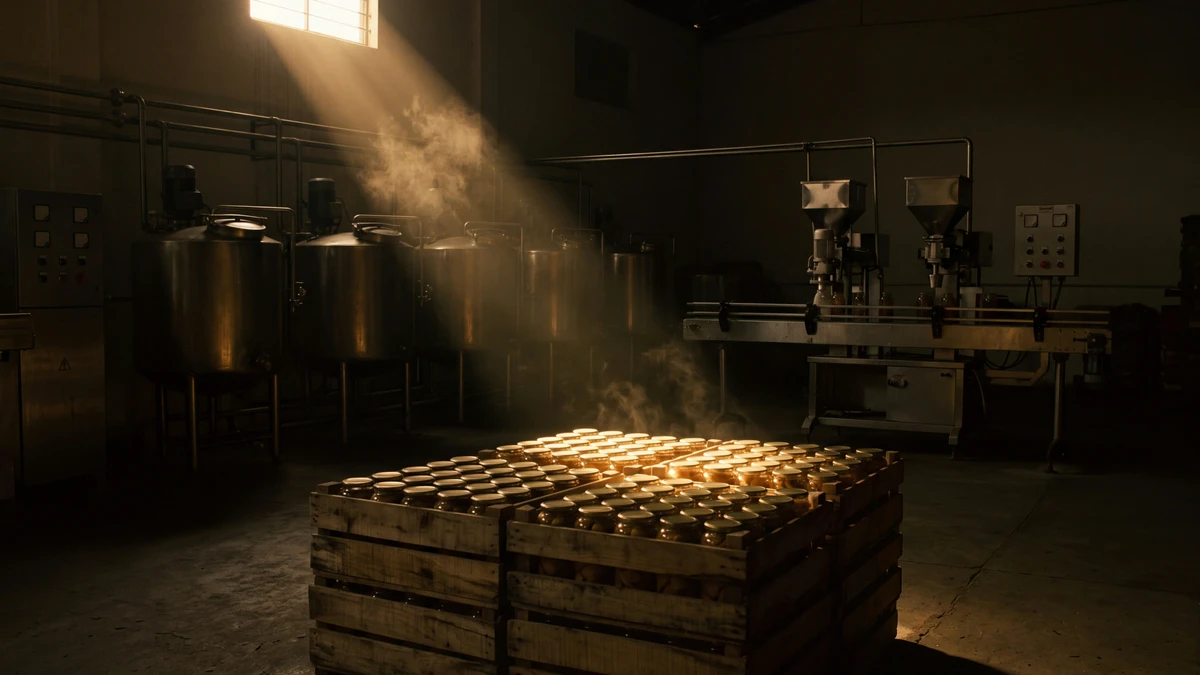
Provender is a food operations platform I founded and am building at Handisi Digital Solutions Limited. It is aimed at specialty, heritage, and culturally-rooted food brands in the $250K–$5M revenue range: manufacturers who run production on spreadsheets, sell through Shopify and Amazon, keep their books in QuickBooks, and are approaching the FDA’s FSMA 204 traceability deadline of July 20, 2028 with none of those systems connected. The marketing site is live at provender.io, and the first enterprise client runs a single-tenant deployment in production: Azures Carib, a Barbados-based specialty gluten-free food manufacturer.
The challenge
FSMA 204 requires food businesses to capture Key Data Elements at every Critical Tracking Event in a product’s journey and produce traceability records quickly when the FDA asks. For a small manufacturer, the day-to-day reality is five or more disconnected systems: spreadsheets for production and inventory, Shopify for direct sales, a separate wholesale workflow, a payment gateway, and accounting software. Nothing traces a lot end to end. When an inspection or a recall drill demands a batch record, someone spends the better part of a working day (eight hours or more) reconstructing it by hand.
Enterprise food ERPs automate all of this, but their pricing and implementation timelines are built for companies far larger than a specialty brand. Mid-market food software exists, but the brands I designed Provender for share a constraint those tools tend to ignore: they do not want to rip out Shopify, QuickBooks, or Amazon. They want the food-native layer (lot traceability, HACCP monitoring, batch production, expiry-aware inventory) added on top of the stack they already trust, at a price a $1M brand can justify. That gap is the product.
The approach
One architecture decision shaped everything else: PostgreSQL is the source of truth. An earlier design explored building on top of ERPNext as the foundation; the shipped architecture inverts that. A PostgreSQL-native core owns the data model for lot genealogy, inventory, production, and compliance, and ERPNext remains only as an optional accounting adapter for customers who want it. Owning the schema matters because trace-back is fundamentally a graph problem. A recall question is “everything upstream and downstream of this lot”, and answering it fast means modelling it directly rather than reverse-engineering it out of a general-purpose ERP.
The backend is FastAPI (Python). It implements FSMA 204 Key Data Element capture at each Critical Tracking Event, graph-based lot genealogy for forward and backward traceability, HACCP Critical Control Point monitoring fed by IoT sensor readings over MQTT (automated temperature and humidity logging in place of paper records), and FEFO (first-expired, first-out) picking automation.
The frontends are Next.js, four of them: a D2C storefront, a B2B wholesale portal with customer-specific pricing, a production-floor tablet UI with guided workflows and barcode scanning, and admin dashboards for compliance monitoring and KPIs. Stripe handles payments, and the commerce integrations connect to a brand’s existing Shopify rather than replacing it.
Because the first customer is an enterprise, enterprise plumbing is a launch feature rather than roadmap: SAML/OIDC single sign-on ships at launch, multi-factor authentication is required for accounts outside SSO, and single-tenant deployment on the client’s own server is a Day-1 offering.
Go-to-market is enterprise-first: demo-led, single-tenant deployments on the client’s own infrastructure or ours. The self-serve SaaS tiers are deliberately parked until the enterprise deployments have built up operating history.
The outcome
I want to be precise about status, because this is my own product and the temptation to round up is real. Provender is in production with exactly one client. The first enterprise deployment is live, single-tenant, and general availability beyond it is deliberately gated on the operating history it builds.
What I can state today: the first enterprise client, a specialty food manufacturer based in Barbados, runs the single-tenant deployment. The trace-back engine is benchmarked, not estimated: a p95 of 2.5 milliseconds at one hundred thousand lots and 17.4 milliseconds at one million, against a 50-millisecond design target.
The remaining headline numbers are design targets, engineered against and not yet customer results: FDA lot trace-back reports generated in under 5 minutes, against the 8+ hours of manual reconstruction that is standard practice today; a 45% reduction in inventory waste within four months of adoption, driven by FEFO picking; and roughly 30 minutes cut from batch completion through the guided tablet workflows. I will replace these with measured figures as early customers build up operating history.
What the project already demonstrates is the part I can stand behind now: taking a product from PRD to an enterprise-grade, compliance-heavy architecture as a solo engineer, and being willing to reverse a foundational platform decision (ERPNext out of the core, PostgreSQL in) when the original bet stopped fitting the product.