Handisi Digital Solutions Limited (own product) · Agritech / SaaS · 2026 · pre-launch
Farmcore: 31 epics and 10,000+ tests before the first pilot
Product of Handisi Digital Solutions Limited · Ongoing: soft-launch Nov 2, 2026; GA Jan 18, 2027
Farmcore Coop is the product I founded and lead at Handisi Digital Solutions Limited: an operating system that helps agricultural cooperatives pass audits, qualify for bank credit, and meet EU deforestation-regulation (EUDR) requirements on export crops, launching first in Tanzania. The product has not launched yet, and I have written this case study accordingly, though the marketing site is live at farmcore.io. What I can show today is the engineering record: thirty-one epics shipped, more than ten thousand automated tests, and zero production incidents. The soft launch is November 2, 2026 with four pilot AMCOS (two cashew, two coffee), and general availability follows on January 18, 2027.
The challenge
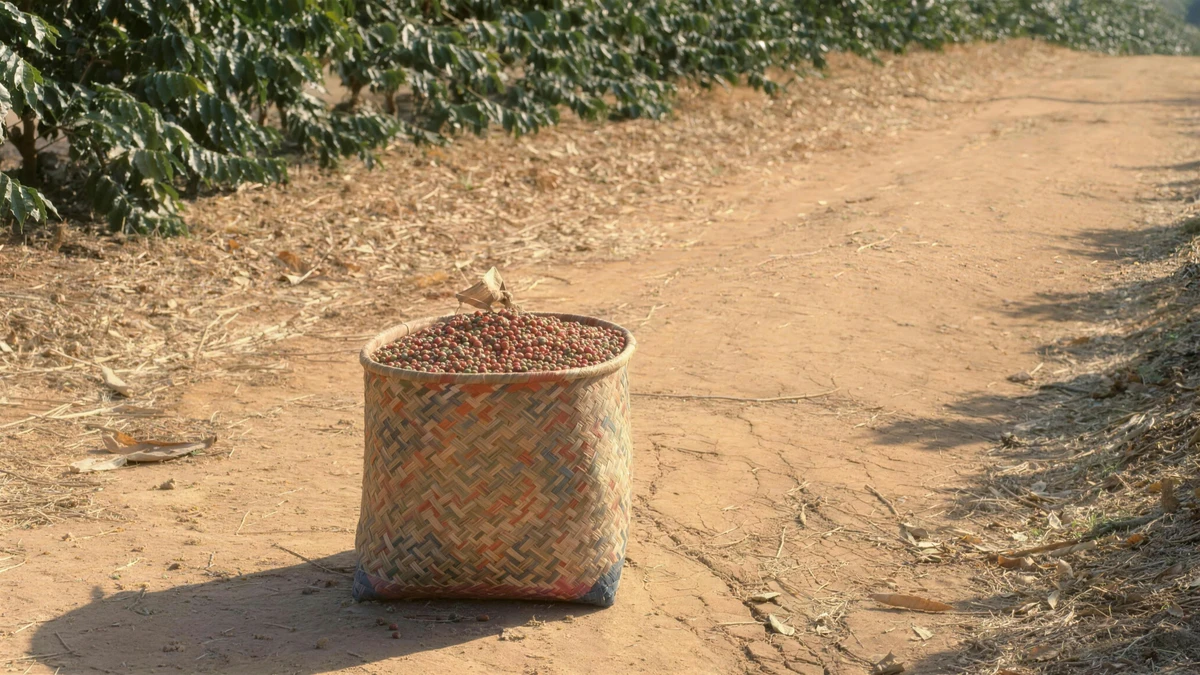
Tanzania has over 6,000 AMCOS (agricultural marketing cooperative societies) and around 320,000 coffee farmers selling through them. Most cooperatives still run on paper: member registers in exercise books, receipts written by hand, season accounts reconstructed at year end. Paper records fail audits, and books that fail audits do not get bank financing. Meanwhile EUDR now requires due-diligence statements tracing export crops like coffee back to the plot, which a paper-based cooperative cannot produce.
The people who would use the system are hard to reach with conventional software. Extension officers cover roughly 1,172 farmers each, so training-heavy tools fail. Most members carry feature phones. Most existing agritech targets the individual farmer with a smartphone app, which in my view is the wrong customer and the wrong device assumption. The organisation with the budget, the record-keeping obligation, and the audit deadline is the cooperative itself.
The approach
I built Farmcore cooperative-first. The customer is the AMCOS, not the farmer, and the pricing follows: six tiers, starting at $15–25 per month for a small AMCOS and scaling up to donor-consortium arrangements, with billing aligned to harvest cash flow rather than a flat monthly subscription in cash-poor months.
Access channels match what people actually hold in their hands: USSD for any GSM phone with no data, chat messaging and SMS for members with basic smartphones, and an offline-first React Native app for cooperative staff, built on a local database designed to keep working for 72+ hours without signal and sync when coverage returns. Everything ships in English and Swahili. The backend is Python on PostgreSQL with Redis, with mobile-money collection and disbursement through the AzamPay and Selcom aggregators, reaching every major Tanzanian network.
Compliance is treated as a set of launch gates, not marketing badges. PDPC data-protection registration, the TCRA USSD shortcode, EUDR due-diligence statement support, TCDC’s MUVU requirements, and SOC 2 Type I are all in progress on the pre-launch path. I list them here as gates the product must clear, not credentials it holds.
The part I am most deliberate about is engineering discipline for a one-founder product. Thirty-one epics have shipped behind a test suite of more than ten thousand automated tests, and the platform has recorded zero production incidents through the build. For software that will hold a cooperative’s financial records, I decided the test suite had to exist before the customers did.
The outcome
The honest outcome, today, is a finished pre-launch platform and a dated plan. The pre-launch path runs August 31 to December 21, 2026. On November 2, 2026, four pilot AMCOS go live in the soft launch, two in cashew and two in coffee. General availability is January 18, 2027. Tanzania comes first; Zambia and Zimbabwe sit on the roadmap for year three onward, and I say that plainly because early drafts of my own marketing overstated it.
The headline goal is a 30% improvement in farmer income within twelve months of GA, through better records, better market access, and access to formal credit. That number is a design target I will measure against the pilot cooperatives; I will not present it as a result until the data exists. What I can already stand behind is the build itself: the epics, the tests, and the operating record. The next update to this page will have pilot numbers in it.